Multi-stem trees can be showstoppers. A mature maple with three leaders lifts a whole yard, and a big cedar with a split trunk can frame a driveway like a cathedral arch. They are also, by their very structure, more complicated to keep safe. When wind loads pull those stems in different directions or decay eats at a union from the inside, the stakes rise fast. Tree cable and bracing is the craft of keeping those trees standing, not by locking them in place, but by guiding how they move and taking the sharp edge off stress.
This work sits at the intersection of physics, plant biology, and judgment earned in the canopy. Done well, it buys time for trees to continue thriving where full removal would be a loss. Done poorly, it creates a false sense of security and can make failures more dangerous. The details matter.
Why multi-stem trees fail differently
A single-stem tree distributes load along one main axis. Multi-stem and co-dominant trees divide load across unions that were never as strong as a single trunk. The wood grain in a tight fork often wraps around embedded bark rather than interlocking. Arborists call that “included bark,” and it changes everything. Instead of a robust, U-shaped union with continuous fibers, you get a V-shaped seam that wants to unzip under tension.
Add common stressors, and risk grows fast. Prevailing winds create a one-sided canopy. Lawn irrigation and shallow soil push roots to the surface and reduce anchorage. A previous topping cut jump-starts two or three fast-growing leaders that look vigorous, but attach with poor architecture. Decay fungi follow pruning wounds or storm damage into the heartwood. Each of these might be manageable on its own. In combination, they turn a handsome multi-stem into a candidate for support.
Even healthy trees flex. That sway is not a flaw, it is how a tree sheds energy. The goal of a support system is not to arrest all movement, it is to keep movement within a safer range and prevent the catastrophic mode of failure, that sudden peel or shear at the union that drops a leader on a roof.
What cabling and bracing actually do
Cabling and bracing are related, but they solve different problems.
Cables are installed high in the crown to share dynamic loads between stems. When one leader takes a gust, the cable transfers part of that load to its partner, and the system rides it out together. Most cabling for multi-stem stabilization uses either extra-high-strength steel with dead-end grips and thimbles, or synthetic systems that incorporate shock absorption. Steel is durable and strong. Synthetic systems offer more give and are easier to adjust over time. In both cases, the cable should have slack. A taut line reduces natural movement, amplifies shock, and can girdle tissue if it is not installed with proper hardware.
Bracing uses threaded steel rods to secure a weak or cracked union against shear. Think of bracing as an interior guard that holds a seam from opening further. In a tree with included bark or an existing split, rods bridge sound wood across the union so those fibers can share load under wind or wet snow. Many stabilized trees combine both approaches, with rods installed near the union and cables placed higher to handle movement.
A quick example from the field: a 28-inch DBH Norway maple with three co-dominant stems stood over a childcare center’s play yard. One leader had a developing crack that ran behind a strip of included bark. We reduced the outer canopy to cut sail, then installed two stainless rods across the union and a triangular steel cabling system two thirds up the crown. That tree has weathered two major windstorms since, with no further separation at the seam. Without reduction pruning and the combination of rods and cables, it would have been a textbook hazard.
When support makes sense, and when removal is smarter
Cabling and bracing are not cure-alls. They are long-term interventions for trees with good prospects and clear targets worth protecting. On assessment, I look for the ratio of problem to promise. If the union is weak but the stems show strong taper, good vitality, and only limited decay, support is often justified. If decay has hollowed the crotch to a thin rind of sapwood, there is no amount of steel that will turn it into safe wood. Similarly, if the lean is severe and the root plate shows lift or fungal conks at the base, you are dealing with a different class of risk. That is the path toward Dangerous Tree Assessment and Removal, sometimes on an emergency schedule.
Property context matters. A heritage beech shading a patio earns more consideration than a volunteer poplar under power lines. In wildfire interface zones, FireSmart Tree Services may lead us to crown-thin resinous species and remove ladder fuels rather than prop up a poorly attached leader near a structure. And on tight urban lots, even a supported tree can remain a poor fit if failure would directly impact bedrooms or neighbor’s roofs.
When removal is chosen, the work does not stop with the last cut. Stump Removal & Grinding clears the site safely and allows for replanting. Good replacements often follow the right-foliage, right-place rule, with single-stem species less prone to co-dominant growth in confined spaces.
Reading the tree: diagnostics that drive the plan
Walk a tree with a slow eye and a method. I circle the base and sight up each leader, looking for asymmetries that suggest load. I probe bark seams near crotches and map old pruning wounds. I look for callus patterns that show the tree has been managing a crack over years. If the crown has been lion-tailed, with foliage clustered at the ends of long naked branches, I plan to undo that imbalance before thinking about steel.
Here are quick cues that a multi-stem tree might benefit from support.
- A V-shaped union with included bark and little natural flare where the stems meet A visible crack, fresh or callused, near the fork, sometimes with water staining Two or more fast-growing leaders sprouting from the same point below a past topping cut Unbalanced canopy mass, often heavier toward a structure or prevailing wind Signs of decay around the union or at the base, including fungal conks or soft wood
Note what does not automatically disqualify a tree: surface roots on a maple, a mild lean on a hillside, or a bit of dieback at the tips. Those are data points, not verdicts. This is where a Certified Arborist Consultation pays for itself. Experience helps separate cosmetic concerns from structural threats, and puts numbers to fuzzy terms like acceptable risk.
Choosing static or dynamic cabling
The static-versus-dynamic debate is less about brand loyalty and more about tree biology and site conditions.
Static cabling, commonly extra-high-strength steel, has decades of data behind it. For very heavy leaders, for compromised unions that need firm limitation of movement, or where a large target is directly below, static is often the prudent choice. It is visible at close range, requires through-bolts or lag hooks with thimbles and dead-end grips, and it lasts a long time with proper inspection. It is also unforgiving if installed wrong. Overtension makes a tree fight the cable. Undersized hardware corrodes or deforms.
Dynamic cabling uses woven synthetic lines with integrated shock absorbers. These systems are kinder to trees that need to continue moving more freely to lay down reaction wood. In species that compartmentalize well and in trees without significant decay, dynamic systems can reduce sudden peak loads and are adjustable as the tree grows. They do require disciplined follow-up. UV exposure and time take a toll, and replacement intervals are shorter than steel.
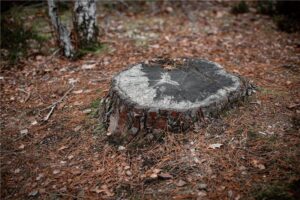
Most multi-stem stabilizations I install on private properties with decent access use steel for main leaders and, in some cases, add a dynamic line to a secondary limb that needs load sharing but not rigid constraint. Every site is different, and the right answer can change over a tree’s life.
Placement, geometry, and the art of enough
There is a practical rule many arborists follow: place the cable near two thirds of the distance from the union to the top of the crown. This position uses leverage where it helps most, limiting movement without turning the tree into a pole. It is a guideline, not a commandment. Wire elevation shifts up or down a bit to clear rubbing branches, to hit solid wood, or to avoid cavities. On a sprawling oak, you might ladder two sets of cables at different heights to balance ends.
Triangles beat lines. A single cable from leader A to leader B is better than nothing, but a triangular plan that links A to B and A to C or B to C often distributes load more evenly in a three-stem configuration. I tend to avoid overbuilding a web. Every additional penetration is a wound. The craft is to install the least hardware that achieves the most stability, then combine it with Tree Pruning & Crown Shaping to lower the sail area that drives movement in the first place.
Bracing rods need clean, straight bores through sound wood, set to cross the plane of the failure seam. I usually install one or two rods, spaced vertically, to stitch the union. The exact diameter and placement depend on tree size and the character of the defect. The aim is to bear load across strong fibers, not sink a bolt through decay and call it fixed. Where decay is present but bounded, a slightly lower placement through better wood can be smarter than going right at the seam.
How I install a support system that lasts
Homeowners sometimes picture this as a quick bolt-and-go job. The safe version is more involved. The workflow below reflects best practice shaped by ANSI A300 Part 3 guidelines and the messiness of actual trees.
- Assessment and plan. Document defects, targets, and access limits. Decide on pruning, number and type of cables, need for bracing rods, and the geometry that fits the crown. Reduction first. Reduce end weight and rebalance the canopy with thoughtful cuts, not flush hacks. Take small reductions on several branches rather than a single large cut. This lightens load before any drilling or hardware goes in. Set hardware in sound wood. For steel, choose through-eye bolts over lag hooks when possible, especially on larger trees or in unions with any decay. Use thimbles to protect the cable, and select cable size with a margin for growth and weather. Tension to allow movement. Leave measurable sag. A straight, tight line is a red flag. Once the cable is attached and secured, flex the leaders by hand or with a throwline to observe how the system shares load. Finish and record. Sealants are rarely recommended on modern arboricultural wounds, but I will dress burrs around holes and check for bark inclusions that could pinch. Photograph placements and note installation dates for future inspections.
For bracing, drill clean pilot holes, use washers of sufficient size to distribute pressure under the nut, and tighten to snug, not crush. Wood lives. Compaction around hardware kills it.
The quiet partner to cabling: pruning that serves structure
Tree Cable and Bracing does its best work when paired with structural pruning. A dense outer canopy acts like a sail. By thinning selected limbs and lightly reducing overextended leaders, you can drop the leverage that would otherwise test the union. This is not the same as topping or lion-tailing. It is targeted, with a bias toward cuts under 2 inches and an eye on preserving live crown ratio. On young multi-stem trees, early Tree Pruning & https://pastelink.net/zhoc9iqo Crown Shaping can prevent the need for steel later by subordinating one leader and encouraging a dominant trunk with well-spaced scaffold branches.
I keep notes on the pounds of debris that come off a tree during reduction. On a mature elm we stabilized last fall, we removed roughly 15 to 20 percent of end weight from the most exposed leader through a series of small cuts. That shift alone changed how the tree rode wind, and the installed cable barely engaged in moderate gusts. Less work for the cable means more seasons before hardware needs to be revisited.
Aftercare, inspections, and a timeline that respects growth
Support systems are not set-and-forget. I recommend inspections at least annually and after major storms. On steel systems, I check tension, look for abrasion at thimbles, and confirm nuts have not backed off. On dynamic systems, I check for UV degradation, cracked components, or slippage. Tree growth can slowly engulf hardware. That is not immediately bad, but it demands monitoring. If a tree is adding strong new wood around a through-bolt, it is integrating the support. If tissue grows around a cable without a proper stop, it can girdle.
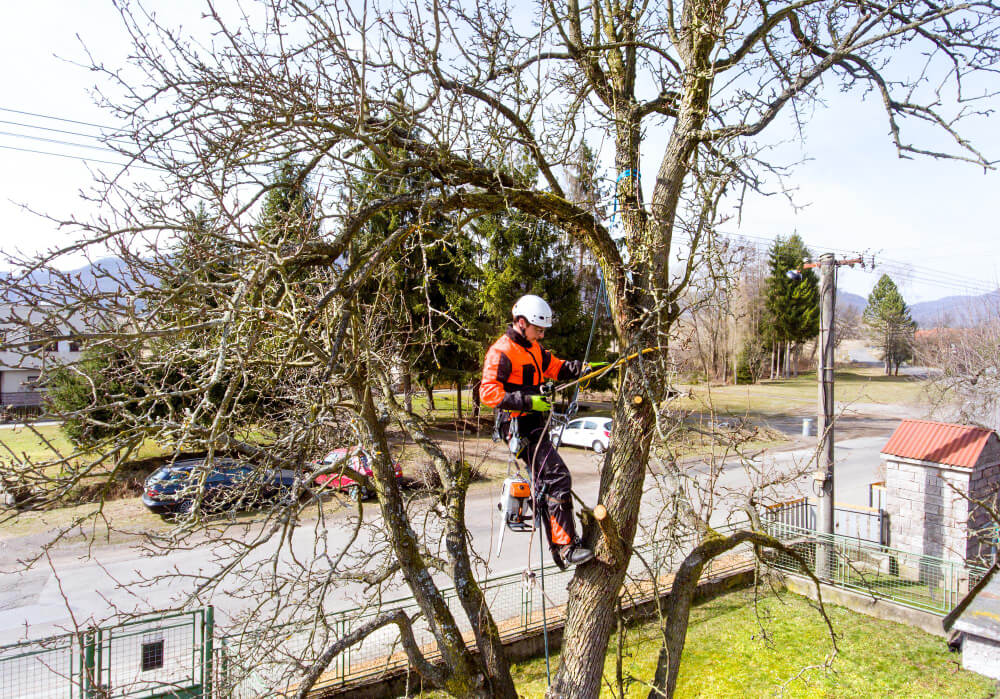
Replacement timelines vary. Synthetic systems often need refresh in the 5 to 10 year range, depending on product and exposure. Steel can last longer, but I have replaced corroded components in as little as 7 years on coastal properties with salt air. After 12 to 15 years, even well installed steel merits a comprehensive review. Plan for it. Put installation and inspection dates on a calendar the same way you would for gutters and roofs.
Safety, access, and real-world logistics
Not every tree is an open lawn and a sunny day. A proper install might require a compact lift to reach high anchor points without over-climbing delicate bark. Sometimes we pre-rig, moving rope and gear before the saws open the canopy. If the work sits over a carport, or above a glass sunroom, fine rigging protects more than the arborist’s reputation.
Storm seasons add pressure. A cracked union after a wind event may call for Emergency Tree Services to secure the site, set temporary slings, and reduce urgent weight before a full repair happens. When a leader has started to unzip but has not failed, you may get one safe window to intervene. Waiting out a weather cycle can turn a repair into a removal.
Permitting and neighbor relations matter, particularly near property lines or in cities with heritage tree ordinances. A Certified Arborist Consultation can provide the documentation that officials and insurers require, especially when you choose support over removal.
Integrating with broader property goals
Trees do not live in isolation from the rest of the site. A stabilization can be part of a longer plan.
- Fire resilience. In wildfire-prone zones, supporting a multi-stem conifer near a structure might only be wise if the broader FireSmart Tree Services plan creates adequate defensible space, removes ladder fuels, and manages bark mulch and understory plantings that carry flame. Water and soil. Compacted or chronically wet root zones undermine everything happening above. Aeration, mulch rings, and smart irrigation make supported unions less likely to be tested to the breaking point. Wildlife and aesthetics. Multi-stem trunks often host cavities that matter for birds and small mammals. A support plan can preserve those features while shifting risk away from bedrooms or patios. I have stabilized an old willow with a wood duck cavity where removal would have dropped a small ecosystem. Pruning and a two-cable setup kept both the family safe and the habitat intact.
Cost, value, and candid conversations
Clients ask what to budget. Prices vary by region, access, height, number of leaders, and hardware. As a rough frame, a straightforward two-leader steel cabling job with modest reduction pruning might land in the low four figures. Add bracing rods, a third leader, tight access that needs a specialty lift, or complex rigging over glass, and the cost climbs. The expense sits against the value of what is under the canopy and the value of the tree itself. An established shade tree can cut cooling bills and add measurable property value. A safe, stabilized tree is often a bargain against roof repairs, injury, or legal exposure.
Honesty belongs in the mix. If I cannot, hand on heart, say that support brings risk down to a level that fits your family and site, I will shift the conversation to Tree Removal Services. A clean, controlled removal, followed by Stump Removal & Grinding and a thoughtful replant, is not a failure. It is good stewardship.
Case notes from the climber’s rope
Anecdotes teach where charts do not.
A split cedar, three stems in a courtyard. One stem leaned toward a bedroom, with a hairline seam that bled in wet weather. The building’s brickwork boxed in access. We set two dynamic lines that tied the outer stems together high in the crown, then placed a single bracing rod through the union where wood was still sound. We reduced the heavy side by about 10 percent. The tenants slept easier. Two winters later, during an ice storm, the dynamic lines engaged, stretched, held, and kept ice shed from snapping the weak union. That day justified every hour spent on thoughtful placement.
A double-trunk ash along a busy sidewalk. The union looked fine from the ground, but a mallet and probe told a different story. Sounding was dull, and the probe found a soft channel. At height, we discovered a hidden cavity from past pruning that had tunneled deeper than expected. Bracing would have crossed mostly air. We recommended Dangerous Tree Assessment and Removal instead. The owner resisted, then agreed after we walked the risk plainly. During removal, the union peeled under controlled rigging, confirming that a “repair” would have put pedestrians in harm’s way. Hard calls are part of the job.
The role of routine care and timing
A supported tree still needs regular care. Seasonal health checks, soil work, and modest structural pruning at intervals keep loads low and vigor high. After a major event, wind or snow, get eyes in the canopy. Cabling hardware can mask developing cracks by keeping the tree upright even as interior fibers fail. That is a reason to inspect more, not less.
Timing matters. Install support in late spring through early fall when bark is flexible and wound response is active, unless immediate risk forces a winter intervention. If a crack opens in January with a forecasted wind on the way, do not wait for perfect seasonality. Secure the site and call in Emergency Tree Services to bridge to a safer window.
How to pick the right partner for the work
Credentials and approach separate craftsmen from dabblers. Look for an ISA Certified Arborist who can reference ANSI A300 standards and who talks more about pruning and load path than about “never failing bolts.” Ask for a clear scope, including inspection intervals. Beware of anyone who proposes a cable without looking at the root zone, or who is eager to drill before discussing Tree Pruning & Crown Shaping. If a crew also offers Certified Arborist Consultation, that signals they are comfortable backing their judgment in writing. If the answer you get is a push toward hardware with no talk of the broader canopy, keep looking.
If the conversation starts with options and trade-offs, you are in good hands. A pro will tell you when support is the right move, and when it is a bandage on a fracture that needs surgery. They will also be there if, a few years down the road, the tree’s story changes and removal becomes the safe path.
A living system, not a static fix
Cabling and bracing are not monuments. They are interventions in a living, growing system. Trees add wood, shed branches, win and lose battles against fungi and weather. The support that fits this year may need adjustment in three. The art is to combine restraint with attentiveness, to let the tree remain a tree while reducing the chance that a gust turns a handsome multi-stem into a headline.
For property owners, the reward is tangible. You keep canopy, shade, and the character of a mature landscape. For arborists, it is the quiet satisfaction of guiding biomechanics with steel, rope, and the subtlety of a well-placed cut. When you get it right, storms pass, branches sigh, cables take a share, and the tree stays home.
Ace Tree Services Ltd.
Name: Ace Tree Services Ltd.Address: 4656 Wallace Hill Road, Kelowna, BC
Postal code: V1W 4C2
Phone: 250-212-9593
Website: https://acetree.ca/
Hours:
Monday: 7:00 AM - 5:00 PM
Tuesday: 7:00 AM - 5:00 PM
Wednesday: 7:00 AM - 5:00 PM
Thursday: 7:00 AM - 5:00 PM
Friday: 7:00 AM - 5:00 PM
Saturday: 7:00 AM - 5:00 PM
Sunday: Closed
Open-location code (plus code): RHF8+8G Kelowna, British Columbia, Canada
Map/listing URL: https://www.google.com/maps/place/Ace+Tree+Services+Ltd./@49.8232606,-119.4337283,659m/data=!3m2!1e3!4b1!4m6!3m5!1s0x537d8b1d074815c5:0x450b88afa7a41435!8m2!3d49.8232606!4d-119.4337283!16s%2Fg%2F11ydkpnh22
Embed iframe:
"@context": "https://schema.org", "@type": "HomeAndConstructionBusiness", "name": "Ace Tree Services Ltd.", "url": "https://acetree.ca/", "telephone": "250-212-9593", "address": "@type": "PostalAddress", "streetAddress": "4656 Wallace Hill Road", "addressLocality": "Kelowna", "addressRegion": "BC", "addressCountry": "CA" , "openingHoursSpecification": [ "@type": "OpeningHoursSpecification", "dayOfWeek": "https://schema.org/Monday", "opens": "07:00", "closes": "17:00" , "@type": "OpeningHoursSpecification", "dayOfWeek": "https://schema.org/Tuesday", "opens": "07:00", "closes": "17:00" , "@type": "OpeningHoursSpecification", "dayOfWeek": "https://schema.org/Wednesday", "opens": "07:00", "closes": "17:00" , "@type": "OpeningHoursSpecification", "dayOfWeek": "https://schema.org/Thursday", "opens": "07:00", "closes": "17:00" , "@type": "OpeningHoursSpecification", "dayOfWeek": "https://schema.org/Friday", "opens": "07:00", "closes": "17:00" ], "geo": "@type": "GeoCoordinates", "latitude": 49.8232606, "longitude": -119.4337283 , "hasMap": "https://www.google.com/maps/place/Ace+Tree+Services+Ltd./@49.8232606,-119.4337283,659m/data=!3m2!1e3!4b1!4m6!3m5!1s0x537d8b1d074815c5:0x450b88afa7a41435!8m2!3d49.8232606!4d-119.4337283!16s%2Fg%2F11ydkpnh22"
Ace Tree Services Ltd. provides professional tree removal, pruning, stump grinding, emergency response, and arborist consultations for properties in Kelowna and across the Okanagan Valley.
The company works with homes, commercial properties, and municipal settings where tree work needs to be planned carefully around buildings, fences, driveways, landscaping, and other site constraints.
Based in Kelowna, the team is positioned to help nearby neighbourhoods and surrounding Okanagan communities with routine tree care and time-sensitive storm cleanup.
Customers looking for careful tree work often want a crew with certified arborist training, insurance, and a methodical approach to higher-risk removals.
Services also include dangerous tree assessment, cabling and bracing, and wildfire risk reduction tree work for properties that need longer-term planning.
To request a quote or discuss tree care options, call 250-212-9593 or visit https://acetree.ca/.
A public map listing is available to help customers confirm the business location and get directions before a site visit or estimate.
For Kelowna property owners who need pruning, removals, or emergency tree help, a local tree service can make it easier to schedule site-specific recommendations and cleanup.
Popular Questions About Ace Tree Services Ltd.
What services does Ace Tree Services Ltd. provide?Ace Tree Services Ltd. lists tree removal, stump removal and grinding, tree pruning and crown shaping, emergency tree service, arborist consultation, dangerous tree assessment and removal, cabling and bracing, and wildfire risk reduction tree work.
Who does Ace Tree Services Ltd. serve?
The company describes its work as serving homes, businesses, and municipalities in Kelowna and across the Okanagan Valley.
Is emergency tree help available?
Yes. Emergency service is listed for downed or uprooted trees, dangerous tree assessment, stabilization work, and branch cleanup. If a tree is near power lines, the safest first step is to stay clear and contact the utility provider before any tree work begins.
Do I always need a permit to remove a tree?
Not always. Permit requirements can depend on where the tree is located and whether it is near a creek, lake, steep slope, or another protected area. It is best to check local rules for the specific property before removal work starts.
How deep does stump grinding usually go?
Standard stump grinding is typically described as going about 6 to 12 inches below ground level, which is often enough for grass or surface landscaping. Deeper grinding may be possible when site plans call for it.
How much of a tree can be safely removed at one time?
That depends on the species, age, health, and structure of the tree. In practice, good pruning is usually about removing the right limbs for health, clearance, and structure rather than chasing a fixed percentage.
What are common signs that a tree may be dangerous?
Large dead limbs, visible cracks, a new lean, root damage, canopy dieback, or storm-related damage can all be warning signs. Trees near structures deserve extra attention when any of those issues appear.
What is cabling and bracing in tree care?
Cabling and bracing are support systems used to reduce the risk of failure in trees with structural weaknesses that may still be worth preserving. They are generally used to add support, not to replace good assessment and ongoing maintenance.
How do I contact Ace Tree Services Ltd.?
Call 250-212-9593.Website: https://acetree.ca/.
Landmarks Near Kelowna, BC
Downtown KelownaThe downtown core is a practical reference point for lakefront neighbourhoods, mixed-use streets, and central residential properties. If your property is near downtown, tree pruning, removals, and cleanup can be planned around tighter access and nearby structures.
Knox Mountain Park
This well-known park north of downtown is a recognizable landmark for nearby homes and hillside properties. If you are close to this area, ask about tree assessment, trimming, or removal work suited to sloped sites.
Mission Creek Greenway
The greenway runs through several parts of Kelowna and is a useful landmark for nearby residential areas. If your property borders or sits near this corridor, site-specific tree planning is especially important.
Pandosy Village
Pandosy is one of Kelowna’s most recognizable neighbourhoods and a common reference point for south-central properties. If you are nearby, request help for pruning, removals, or storm cleanup around homes and small commercial sites.
Rutland
Rutland is a major east Kelowna neighbourhood with a mix of residential and local commercial properties. If you are located in or near Rutland, tree work can be scheduled for both routine maintenance and urgent situations.
Landmark District
This central business-focused area is a practical landmark for offices, service properties, and nearby residential streets. If your site is near the district, ask about careful tree work around parking, access lanes, and built-up lots.
Kelowna’s North End
The North End sits on the edge of downtown and is a useful reference for nearby homes, industrial sites, and commercial properties. If you are in this part of the city, request tree care based on the layout and constraints of the lot.
Airport District
The Airport District is a recognizable north Kelowna reference point for surrounding properties and access routes. If you are in this area, ask about tree services for residential acreage, commercial sites, or roadside cleanup needs.
Glenmore & Dilworth
These established Kelowna neighbourhoods are useful landmarks for central and north-central service calls. If your property is nearby, pruning and removal work can be tailored to mature trees and established landscapes.
Highway 97 Corridor
Highway 97 is one of the city’s main travel routes and a common way to describe location within Kelowna. If your home or property is just off the corridor, a clear landmark reference can help speed up quote scheduling and site planning.